Long ago, in the forests of Bharat (India), a deadly challenge unfolded. Four of Yudhishthira’s brothers lay dead. The only one that could save them was Yaksha. But he had a long list of questions for Yudhishthira. One wrong answer, and an entire lineage would vanish; history itself would end differently.
What followed may be the most unusual trial ever: a prince (future king) tested not for strength, courage, or strategy — but for understanding life itself.
That encounter is known as the Yaksha Prashna of the Mahabharata, an unparalleled body of wisdom even today.
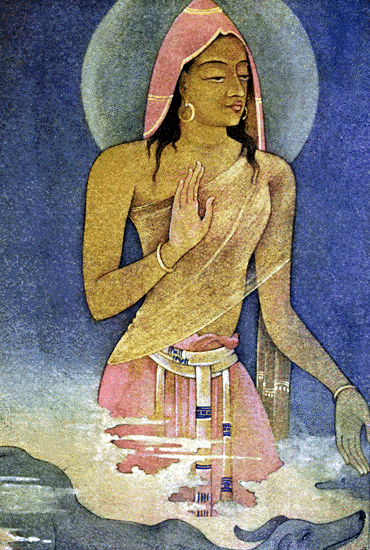
The questions posed by Yaksha were deceptively simple: what is poison? who is an atheist? what is in the universe? Yudhishthira, who had earned the sobriquet of Dharmaraja, triumphed. But how? What was that clarity about existence, and the knowledge of the truth that allowed Yudhishthira to succeed?
Yudhishthira’s greatest strength was his clarity of judgement. He understood the inner workings of human error. He knew that the answers are not to found in the external world, rather it is all an inside game. He deeply understood the subtle:
- Reality is stable enough.
- Human perception is unstable.
- Disorder begins in the ungoverned mind.
Yaksha was not debating metaphysics. He was probing something more dangerous — the psychology of human error. Each question stripped away illusion until only dharma remained. What emerges is a blueprint that one can follow to turn the chaos of the external world into inner harmony.
That ancient interrogation still feels unsettling. It reminds us that our self-mastery, moral psychology, and clarity of judgement, they all remain heavy ongoing works in progress.
The dialog between Yaksha and Yudhisthira is a gentle, enduring reminder; life does not challenge us with impossible problems, but with questions we think we already know the answers to. Perhaps the greatest victory is learning to pause, to reflect, and to cultivate the discipline of the mind. Reasoning has no finality, and no authority surpasses the guidance of one’s own conscience.
 धार्मिक छवियाँ