If there is one central teaching that Buddha dharma is built around, it is the Eightfold Path. Such is its importance that it was the topic of Buddha’s first teaching, and also the very last teaching as he lay on his deathbed under the canopy of two sal trees. In his time, Buddha reserved this teaching for the most mature, at the very end, as a full culmination. That he did for 40 years as a preacher making the Eightfold Path central to dharma.
The Eightfold Path is a guidance on how to be wise, ethical, and meditate well. It is also called the middle way because it is a guide to bring balance in life—between sense gratification and asceticism. Gil Fronsdal says, “Eightfold path is about the personal transformation. It is how we get transformed.”
“It is a personal change deep in our heart , deep in ourselves, where we become not divided, not caught, not attached in ways that limits us or makes us partial.”
— Gil Fronsdal
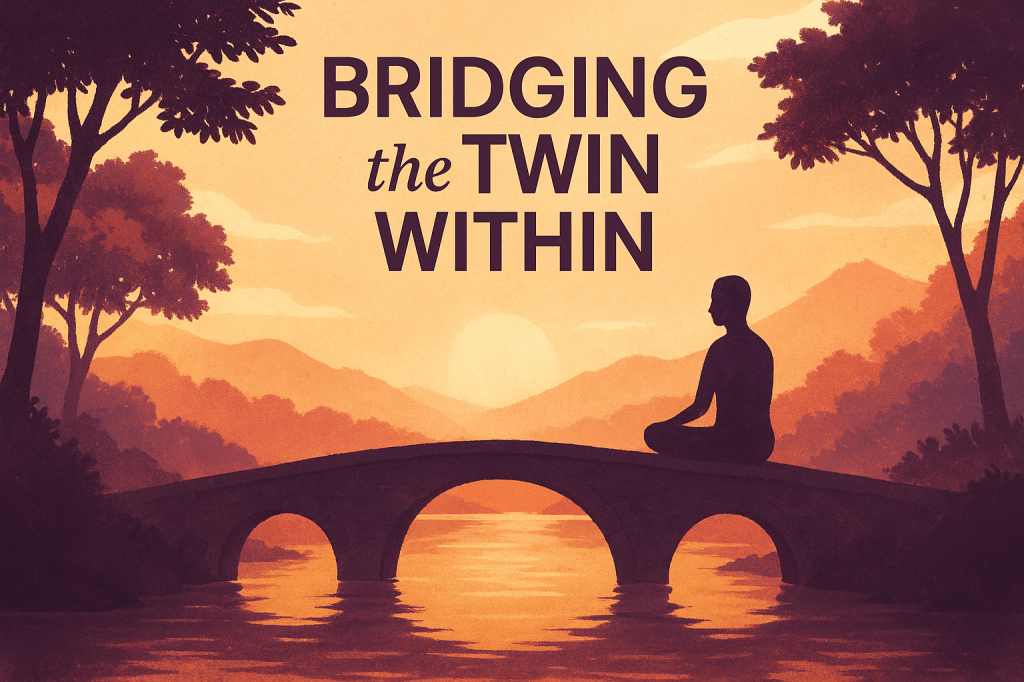
The Eightfold Path is a way to get past our self-limitations. Imagine a twin of yours who, unlike us, has not accumulated the corruptions of the world—one without any self-limiting habits. The Eightfold Path is the bridge from where we are to that twin, if we want to get there.
- Be Wise
- Right View: Abandon a self-centered way of looking at things or the world. Understand the principles of the reality of ALL Existence. Study the samsara. Take a holistic view. To paraphrase Gil, see at the same time where we are caught, and the freedom from it. The idea is not to be limited by the small part of the whole. Right view gives us the path to a healthy living. This is about our personal wellbeing, about our self-improvement.
- Right Thinking/Intention (Mind): Avoid the three evils of greed, anger, and evil-mindedness. Orient the mind towards kindness, compassion, and away from sensual indulgences. Learn ways to not allow our feelings of anger, ill-will, and sensuality to manifest themselves in our behavior. This is where we start to venture into the interpersonal relationships.
- Be Ethical
- Right Speech (Mouth): The orientation of right thinking and intention naturally leads to the orientation of right speech. Use right words in your daily life. Avoid the four evils of the mouth—do not lie, avoid double talk, do not slander, and avoid improper language. Speak at the appropriate time, to the point, rooted in facts, with meaning, words worthy of being remembered, and well illustrated. Speak in a manner that is non-harmful, supportive, relaxing, and trustworthy. Gil Fronsdal suggests that the middle way between self-denial and making people deaf with your self-assertion is to be fully present and then speak with others in a meaningful manner. As Vaisesika Dasa would say it, “practice yoga of the tongue.” This is when the words will “convey so much more than what the words mean”.
- Right Action (Body): The goal of right action is to live with sensitivity. Improve your daily action. Do not steal, do not kill needlessly, and refrain from adultery. These are the three evils of the body that create a life of stress and suffering. It is a realization that we have the capacity to live better. But more importantly, it is an understanding of the “nature of the mind state that engages in stealing, killing, and sexual misconduct.”
- Right Livelihood: Earn your living the right way, in a manner that does not trouble others. Do not cause unnecessary harm—create a lifestyle that minimizes harm to others.
- Meditate Well
- Right Endeavor/Effort: Do not deviate from the right speech, action, and living. As per Gil, the language of Buddha is not about an angry mind, rather it is a mind with anger. Neither is it a greedy mind, rather it is a mind with greed. “And as soon as you add the word with, it’s like stepping back and then seeing the whole picture from a place of awareness, but awareness that hopefully you can adjust just enough calmly, clearly so that it’s enjoyable, it’s healthy.”
- Right Mindfulness: Do not get alienated from this world. Make yourself available to all things in this universe with a fair and right mind—a wholesome mind. “Be aware of the whole.” Give time to the world around you. It is about taking the mind away from its fixations on one thing, and learn to move towards the whole.
- Right Meditation: Do not be agitated by any change of circumstances.
In describing the Eightfold Path, perhaps, ‘Balanced’ is a better word than ‘Right’. It is not a path to awakening. Rather, the awareness of this path is the awakening in itself—to achieve the balance that most of us have lost in life.
 धार्मिक छवियाँ