There are about 84,000 (eighty-four thousand) teachings of Buddha. Tathagata never wrote down any of his teachings. Probably nobody else did either. So, how did his teachings stay consistent? But more importantly, how did they consistently then reach as far as China and Japan? It’s an incredible story.
Four months after Buddha’s death, 500 monks gathered at a cave in Rajagir for a conference. One of them was Ananda, who was not only a monk but also was Buddha’s attendant. He accompanied Buddha wherever he went and heard all he said. At the conference it was decided that all monks will tally their mental notes. Ananda said each of the teachings. Maha Kashyap, who presided over the council asked questions to Ananda about where, when, and to whom Shakyamuni gave this teaching. Ananda replied, and his recall was verified by the 500 monks. Any objections were throughly discussed. Only after a unanimous agreement of all the 500 monks was the teaching scribed and memorized by all the bhikshus (monks). Such conferences were frequently held thereafter to course correct. At some later point these teachings were scribed, especially when they were translated into Chinese and Japanese.
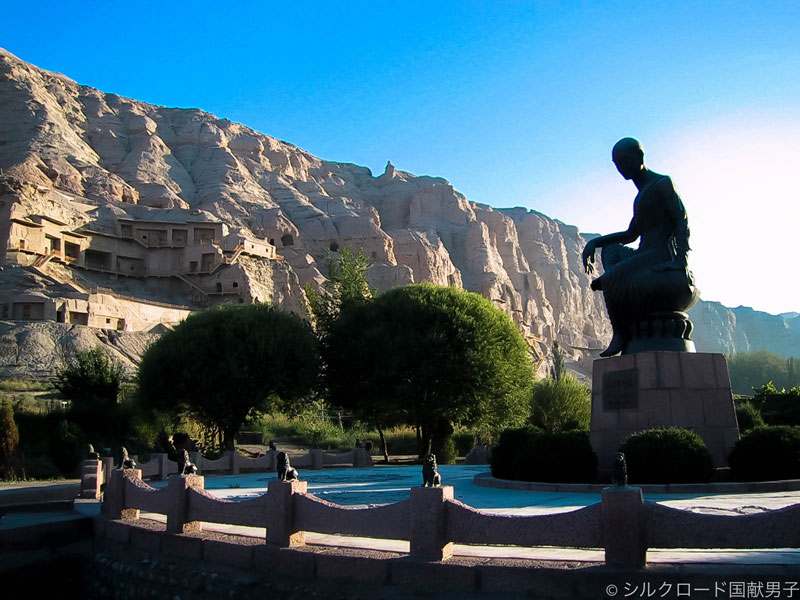
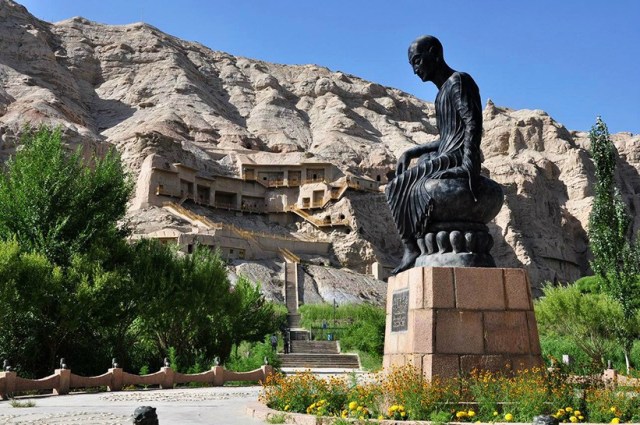
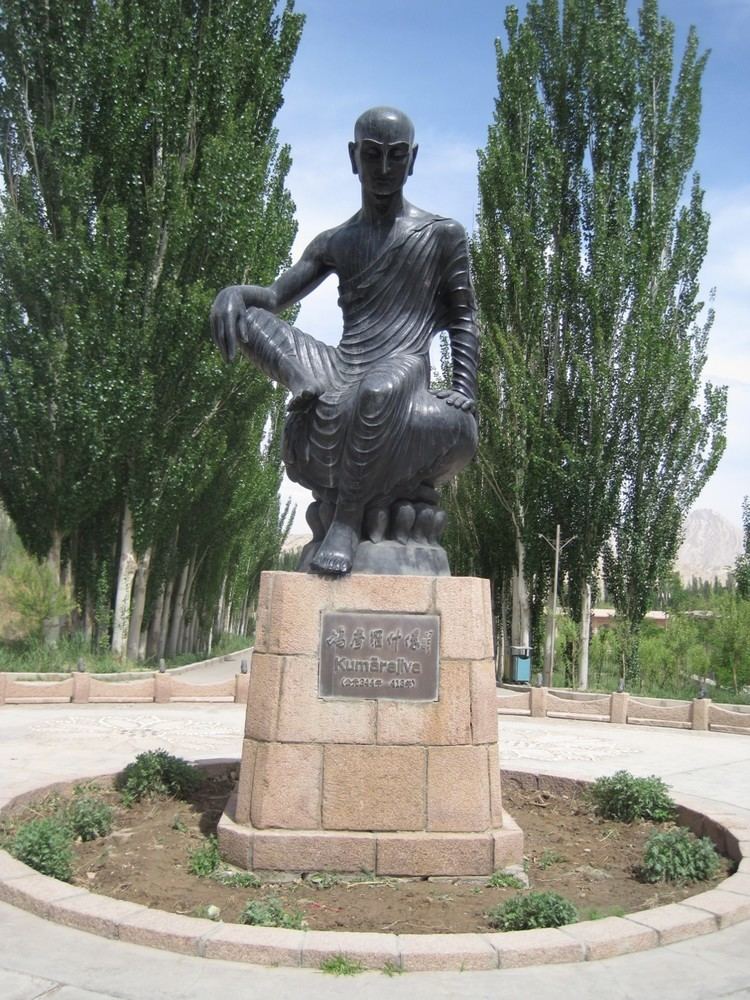
Tathagata’s teachings, all eighy-four thousand of them, were often woven together in some context – just as one would weave together a garland of flower in context of either preparing it to adorn someone/something or in context of preparing a string of fragrant flowers to smell good and fresh. Two different contexts, but the flowers and strings could be the same. Maybe the number of flowers may differ. These contexts are called Sutra (string). These sutras could be compiled in form of parables or even dramas. Hence, these sutras may not necessarily have “facts”, but they definitely have the “truth” as Buddha taught in them.
Many, probably even most, of the sutras were translated into Chinese and taken to China. About a 800 years later a nobleman from India named Kumarayana went to Kucha, a kingdom that lied between India and China, and became its royal priest. He married the king’s daughter and had a son, Kumarajiva, in 344 AD. Kumarajiva grew up speaking Chinese. At age seven, he came to India (Kashmir) with his mother to learn Buddhism. He later became a renowned translator in Buddhist China. At age 62, he was named the national teacher (preceptor) of Buddhism in China, which he continued to do until he died 8 years later. In that duration he translated many Sutras to Chinese. Even though Kumarajiva was an expert at Sanskrit and Chinese, he didn’t translate it all alone. Rather he employed a genius approach. He assembled 2000 bilingual scholars. He’d then lecture the sutras in the presence of the emperor. The scholars took notes and came up with their own translations. As per Nikkyo Niwano, these translations were then “rigorously examined and discussed”. This is how Sakyamuni’s teachings were standardized into Chinese without error, which 250 years later were taken to Japan, where a Seventeen-Article Constitution was promulgated and the first law code was established in Japan.
 धार्मिक छवियाँ